Catalog

Furniture fronts

Catalog

Furniture repair and restoration products

Catalog

Glasses and mirrors

Catalog

Saws

Catalog

Glue

Materials

Why does the material’s colour on screen differ from the sample?

73 views
Share:
Why does the material’s colour on screen differ from the sample?

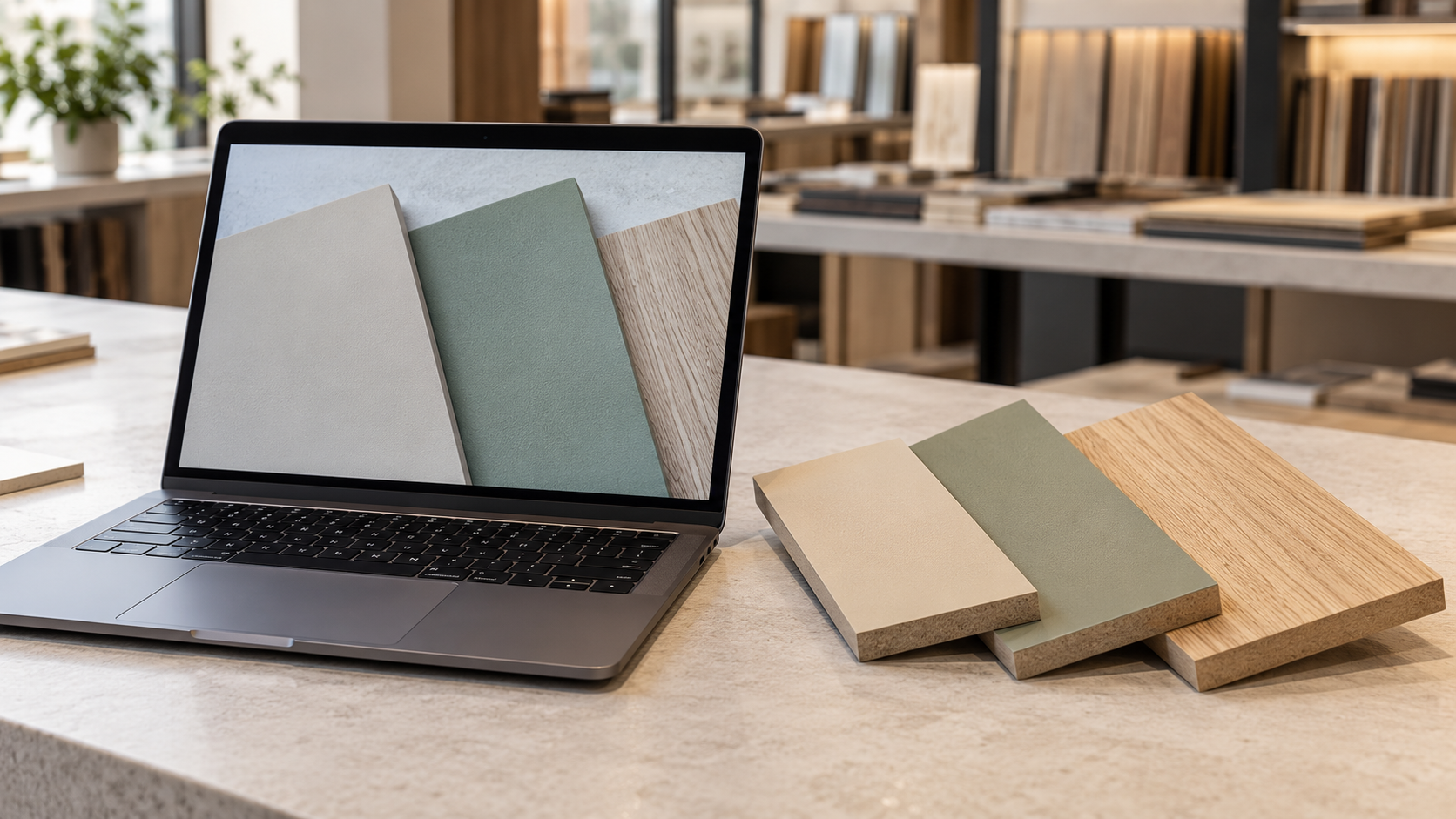
In a photograph, a furniture front may appear warm beige, while the same decor looks greyish in the showroom. This difference does not necessarily mean there is an error in the catalogue: lighting, screen settings and the material’s surface all affect how we perceive colour.

Screens reproduce colour differently

Brightness, eye comfort mode and display settings can make a shade look warmer, cooler or more saturated. As a result, the same decor can sometimes look like two different options on a phone and a laptop.

Lighting changes the impression

A material may look different in daylight than under warm kitchen lighting. Its surroundings also play a role, including the colours of the walls, flooring and adjacent furniture fronts. That is why a combination you liked in a photograph is worth checking in your own interior.

Texture needs to be seen in person

A photograph helps you explore a decor’s pattern, but it cannot always fully capture the depth of a woodgrain texture, the softness of a matt surface or reflections on a gloss finish. These features also influence the overall impression of colour.

How can you make a more accurate choice?

Use the catalogue to shortlist your favourite decors, then make your final decision using physical samples. View them under different lighting conditions and place samples of the furniture front, worktop and other materials side by side.

At Eman Materials showrooms, you can explore samples and choose matching materials before placing an order. This makes it easier to picture how your chosen decor will look in your project.